The coordinates are a signature.
Aleppo sits at approximately 36°12′ north and 37°10′ east—between the Mediterranean coast and Mesopotamia.
UNESCO ↗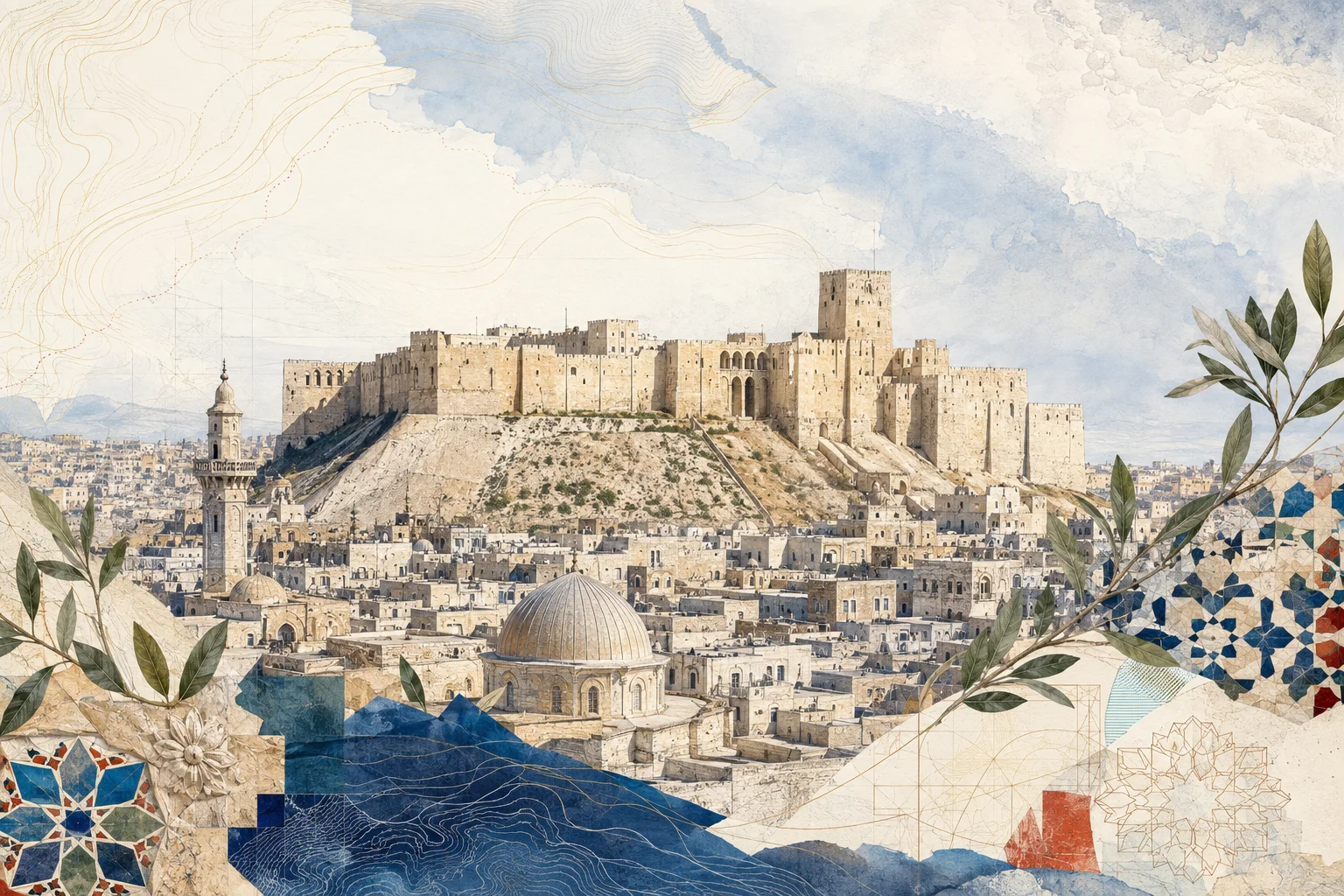
36.2021° N · 37.1612° E
01 / Begin with the map
“The centre of the world” is not a geographic fact. It is a cartographic decision.
Every flat world map chooses a centre. Put Aleppo there and an old truth becomes visible: the city sits between seas, continents and trading worlds.
This one chooses Aleppo. The rings are real great-circle distances from the city—not borders, not influence, simply kilometres.
Measure your own distance ↗02 / A city of layers
Aleppo sits at approximately 36°12′ north and 37°10′ east—between the Mediterranean coast and Mesopotamia.
UNESCO ↗Aleppo has stood at the meeting point of trade routes since the second millennium BCE.
UNESCO ↗Hittite, Assyrian, Arab, Mongol, Mamluk and Ottoman rule all left marks on the city described by UNESCO.
UNESCO ↗That is the official area of the Ancient City property on the World Heritage List: 3.64 square kilometres.
UNESCO ↗The Ancient City was inscribed for the testimony of its cultures and its outstanding urban fabric.
UNESCO ↗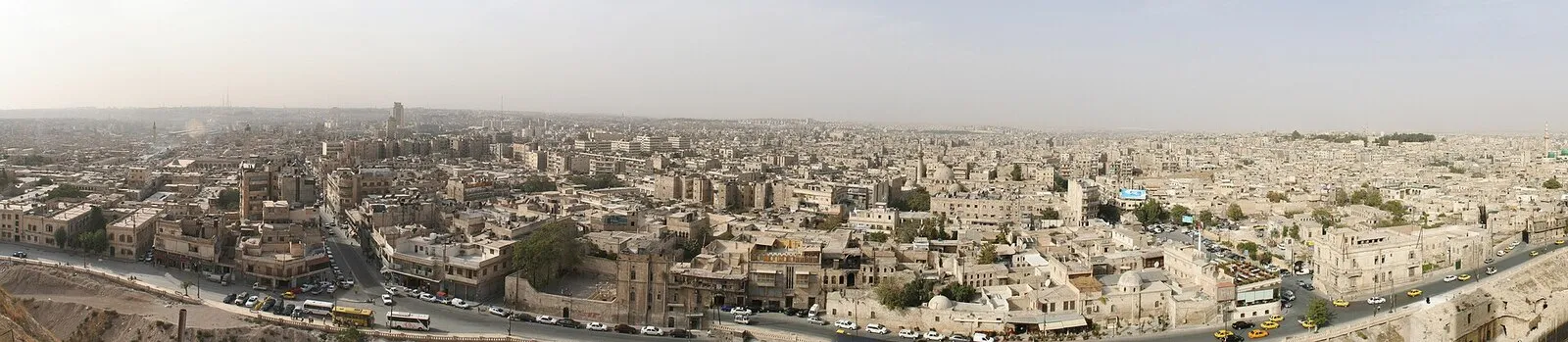
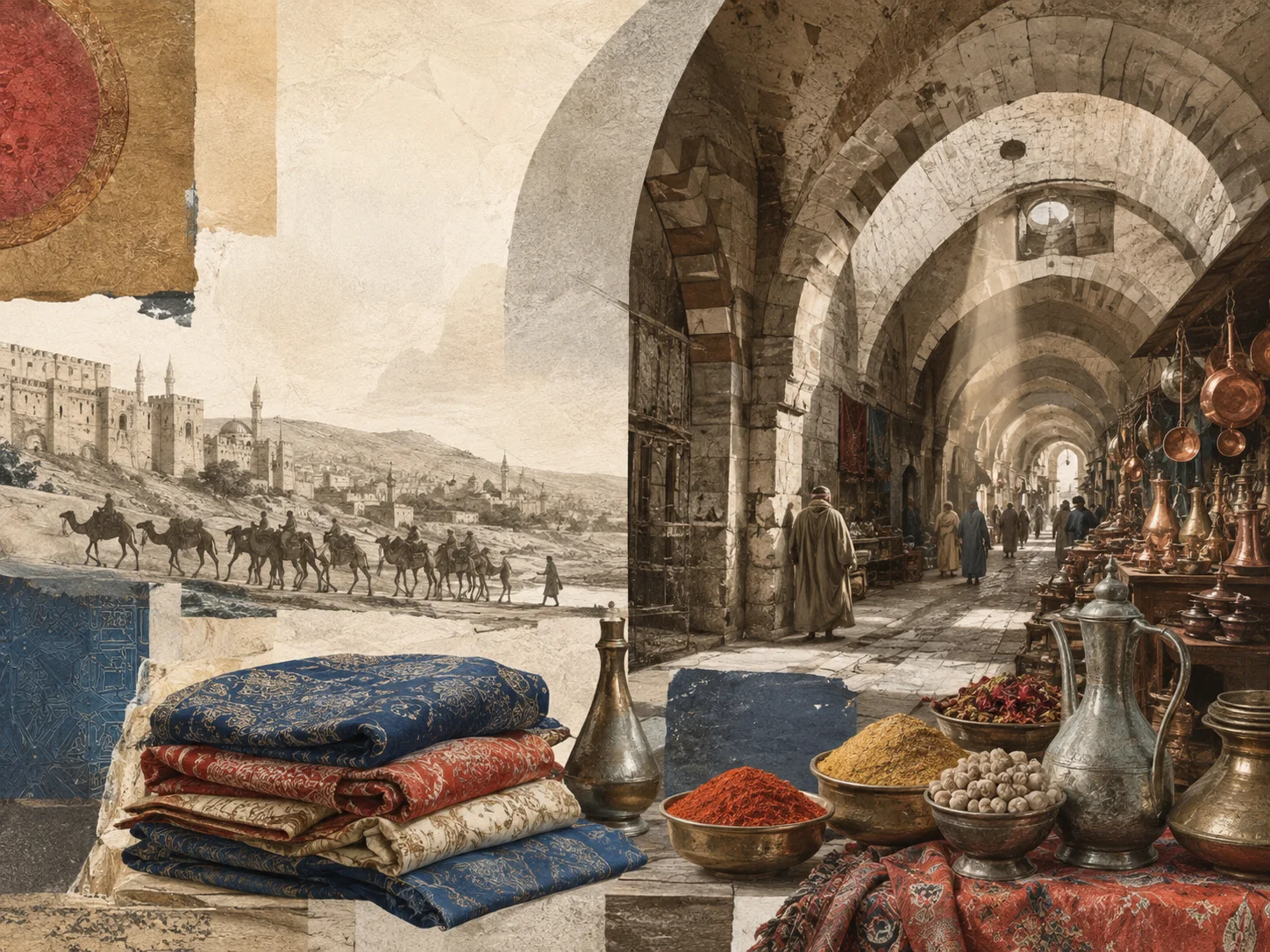
Original editorial illustration · AI-generated for this project
03 / Stone remembers
Its mound preserves evidence of occupation reaching at least to the tenth century BCE; mosques, a palace and baths survive within its walls.
UNESCO state report ↗Parts of the walled city still preserve traces of an early Graeco-Roman street layout beneath later medieval layers.
UNESCO state report ↗UNESCO dates the monumental mosque to the twelfth century, woven into the markets and religious schools around it.
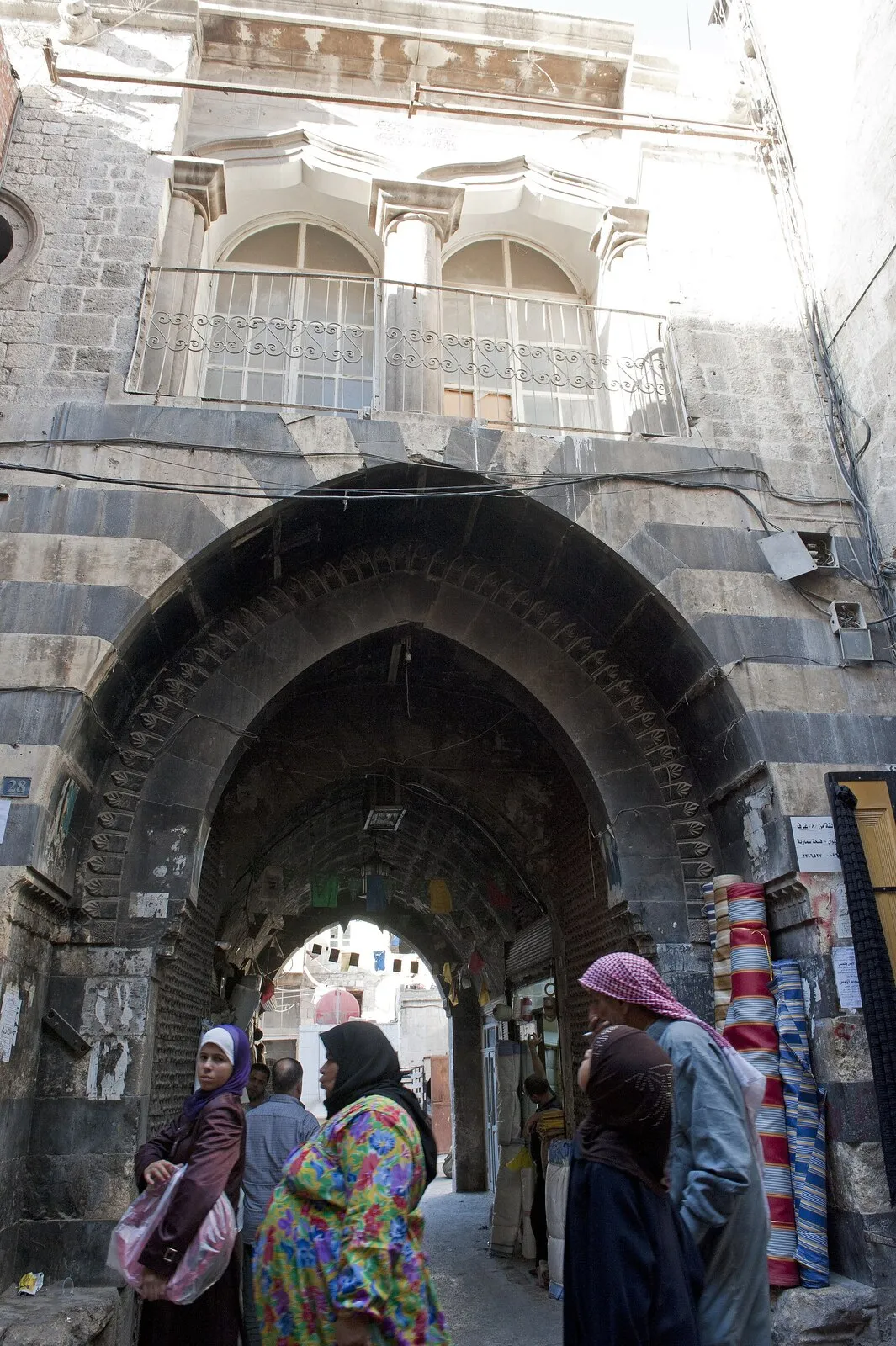
UNESCO ↗The central commercial area contains around 35 souqs, 20 khans and several qaysariyyas.
UNESCO inventory ↗The old commercial spine runs from Bab Antakya in the west toward the Citadel in the east.
UNESCO inventory ↗Al-Saqatiyya Souq was restored and officially reopened in October 2019, returning sweets, nuts and butchers to its arcades.
UNESCO state report ↗Khan al-Harir, beside the Great Mosque, is recorded with 60 shops devoted to textiles, silk and fabrics.
UNESCO state report ↗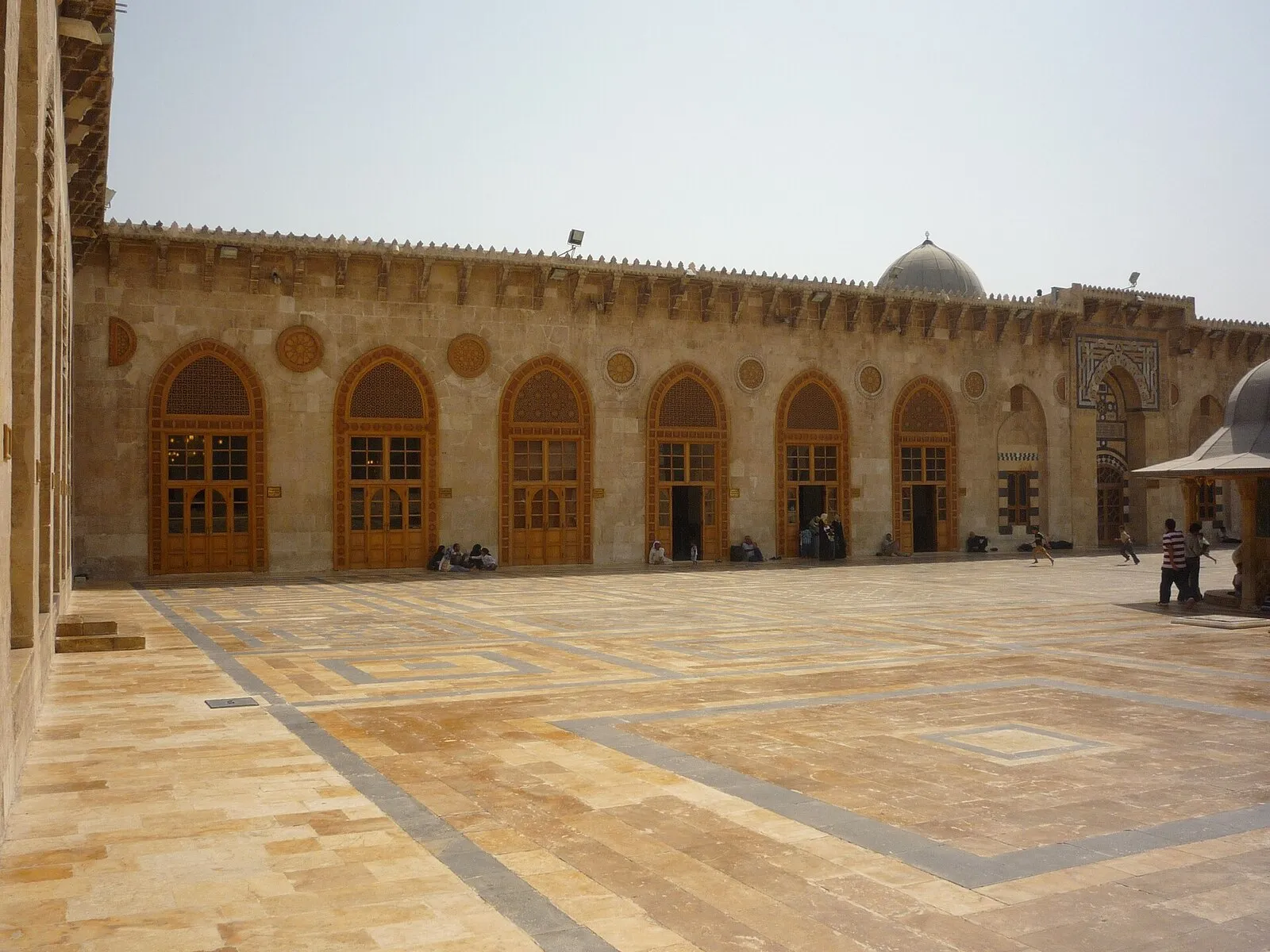
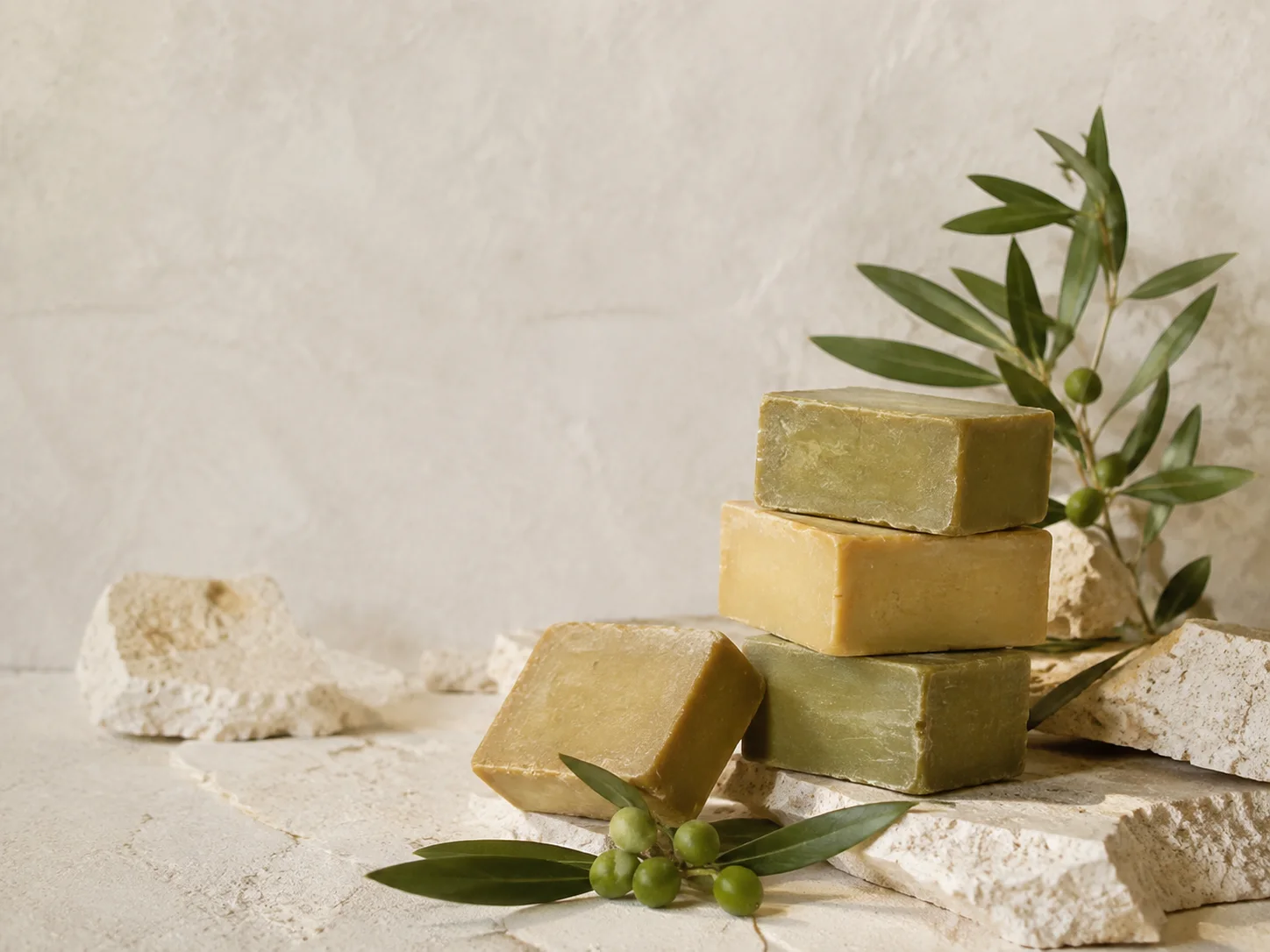 Original AI-generated editorial still life
04 / Made slowly
After olive and laurel oils are cooked, poured, cut and stamped, Aleppo ghar soap is stacked in airy towers to dry.
UNESCO Intangible Heritage ↗The craftsmanship of Aleppo ghar soap joined UNESCO’s Representative List of Intangible Cultural Heritage in 2024.
UNESCO Intangible Heritage ↗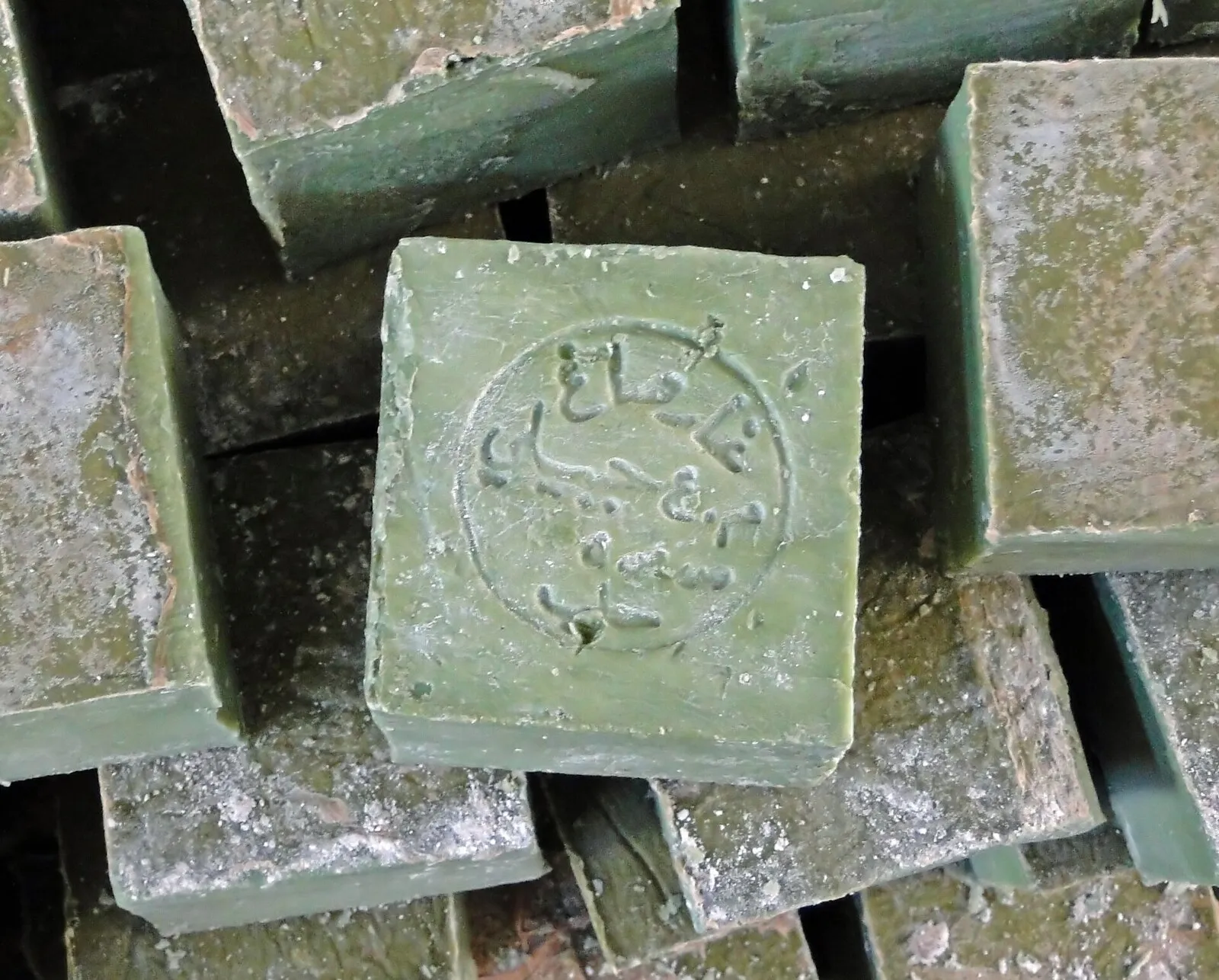
05 / A city you can hear
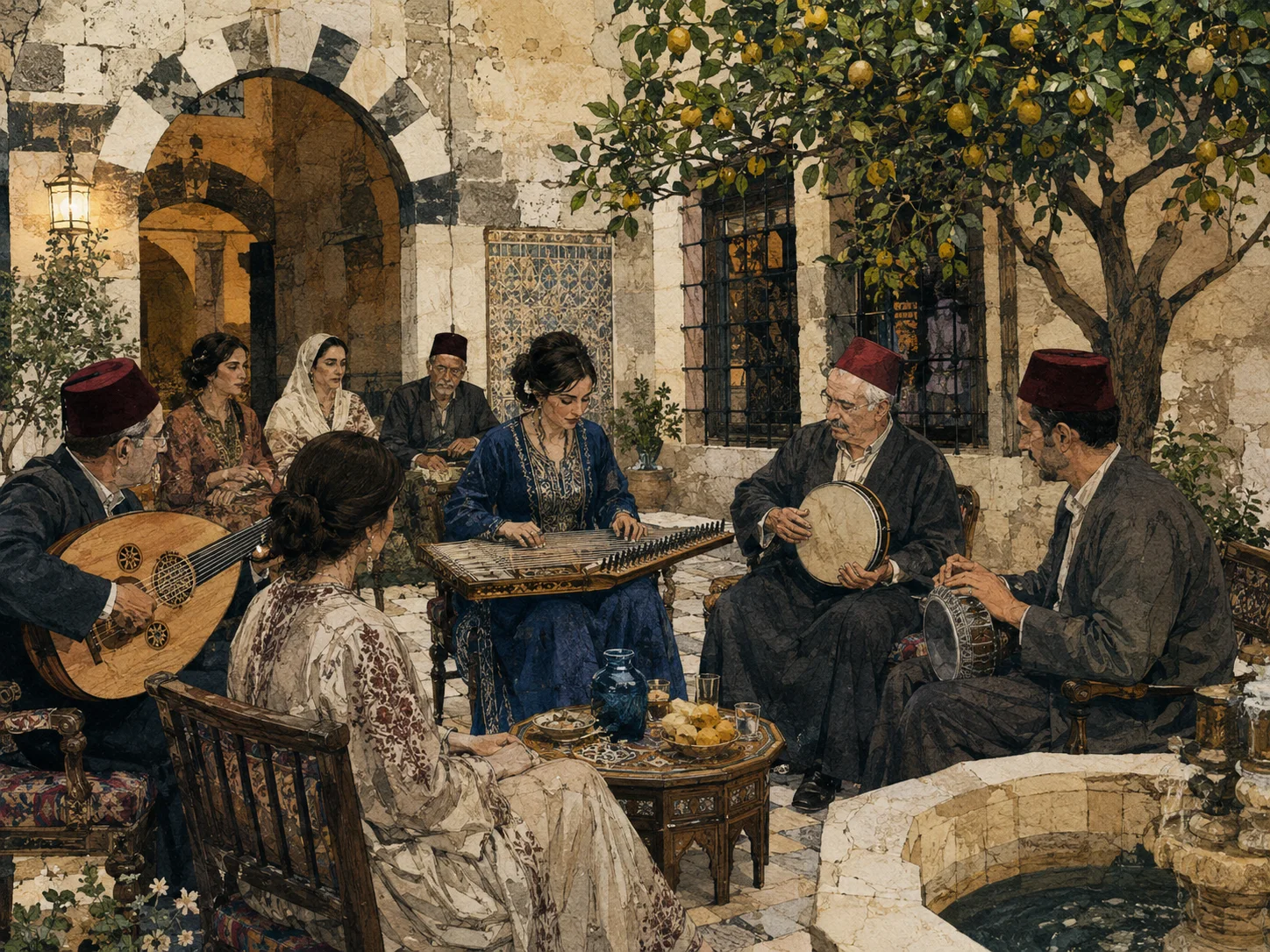
Al-Qudoud al-Halabiya—songs of love, longing and spirituality—was inscribed by UNESCO in 2021.
UNESCO Intangible Heritage ↗06 / The portable city
Painted wooden panels made in 1600–1603 for a Christian merchant’s reception room in Aleppo are now preserved in Berlin.
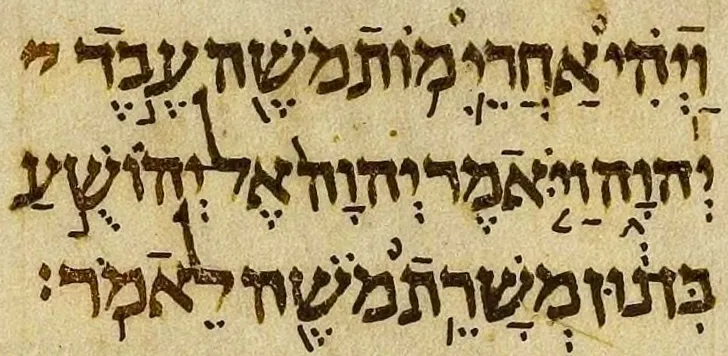
Museum image record ↗The tenth-century Aleppo Codex became one of the most authoritative witnesses to the Hebrew Bible’s traditional text.
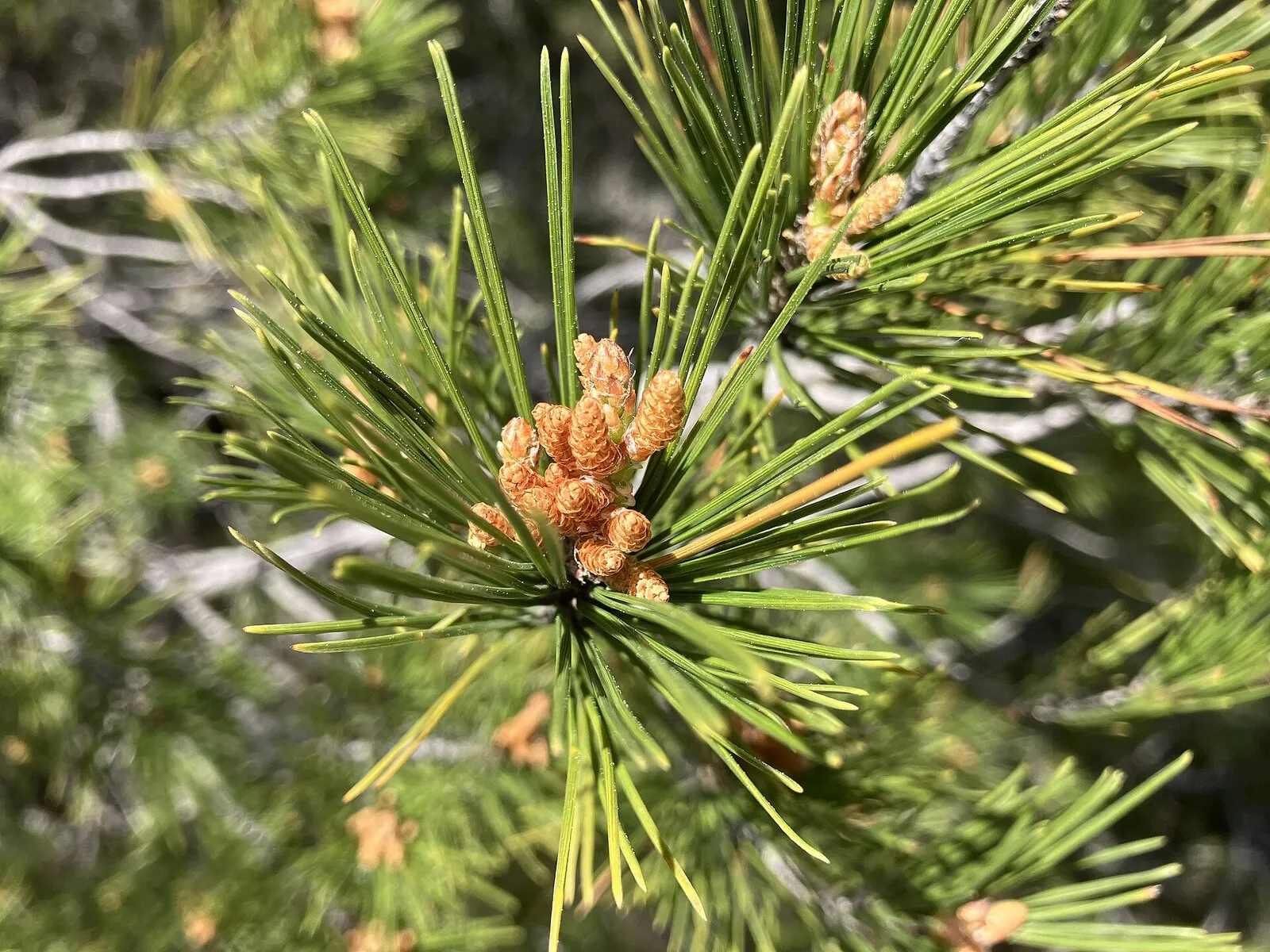
Aleppo Codex ↗Pinus halepensis is known in English as the Aleppo pine; its botanical name keeps the city in Latin.
Kew Science ↗Chillies arrived from the Americas, but this fruity, gently hot variety took Aleppo’s name into kitchens worldwide.
Serious Eats ↗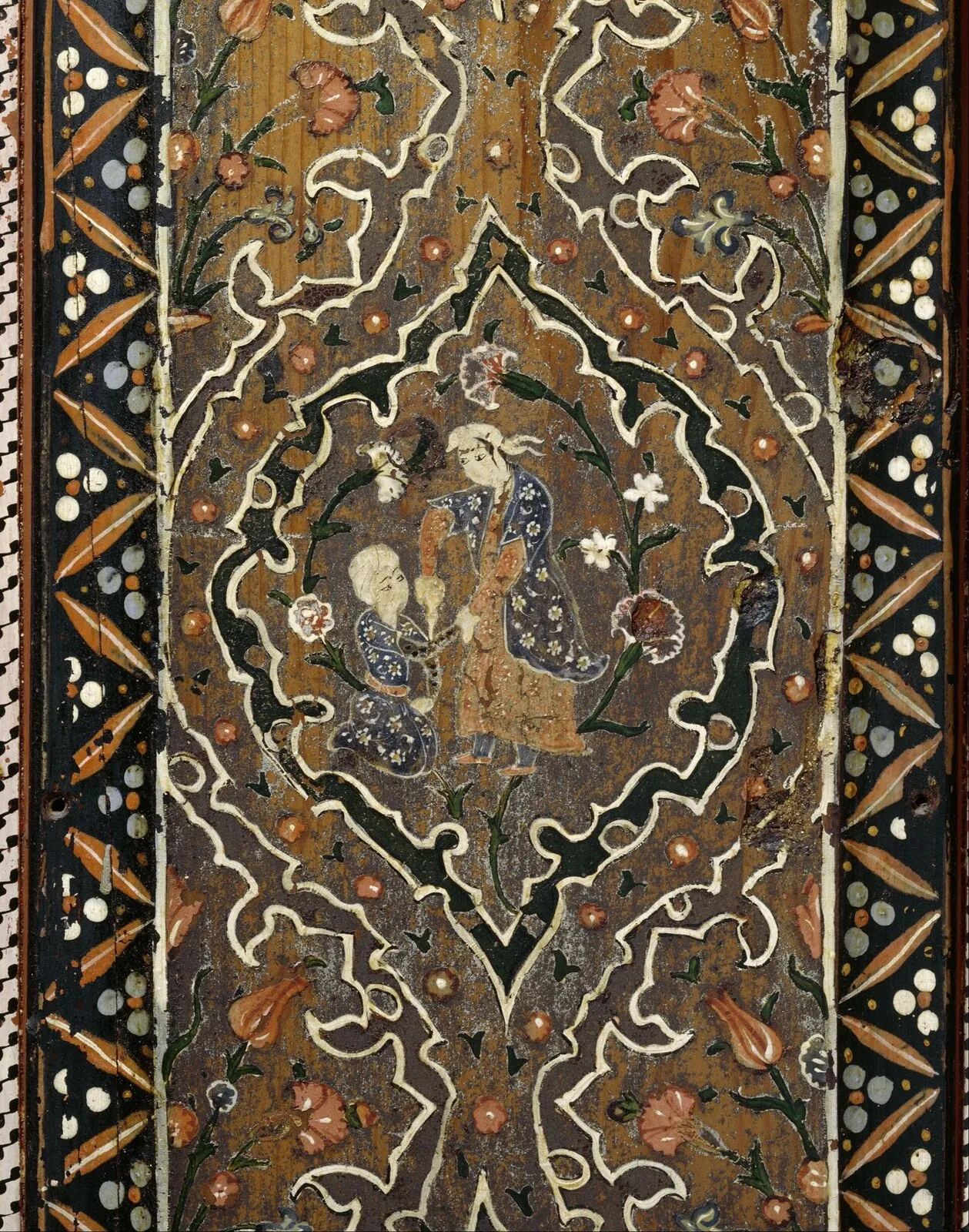
07 / Still becoming
The Ancient City has remained on the World Heritage in Danger list since 2013; restoration continues building by building.
UNESCO ↗Sources / المصادر
Every numbered statement links to its source. Historical photographs are reproduced from Wikimedia Commons under the credit and licence shown beneath each image. Generated imagery is presented as editorial illustration, not documentary evidence.